The table
The Kadıköy market
The Çarşı is the loud, fragrant centre of this part of Istanbul, and walking it slowly costs nothing. Here is how to read the lanes, what to taste, and when to come so you can actually move.
Step off the ferry on the Asian side and the market is already pulling at you. You smell it before you see it: roasting coffee from one corner, brine and fish from another, the warm-sugar edge of a baklava counter in between. Walk up from the water for about five minutes, the streets narrow into the Kadıköy Çarşı, and that is where the quarter does its loudest, best, free-est thing.
I send everyone here first. Not to a sight, not to a viewpoint. Here, to the lanes.
What the Çarşı actually is
The market is not one building. It is a tangle of pedestrian streets behind the ferry terminal, with Güneşlibahçe Sokak as the rough spine and a dozen smaller lanes branching off it. Fishmongers, cheesemongers, pickle shops, spice sellers, bakers, butchers, greengrocers and a couple of legendary coffee houses are packed shoulder to shoulder, and most of them have been at the same address for decades. The buildings above are ordinary apartments. The ground floor is the pantry of the neighbourhood.
There is no entrance gate and no "you are here" board, which throws some people. Don't fight it. The market is small enough that you cannot really get lost, and getting briefly turned around is the entire point.
The first rule of the Çarşı: do one slow loop before you buy anything. The second stall always has it cheaper, or fresher, or both.
The fish, on ice and shouting
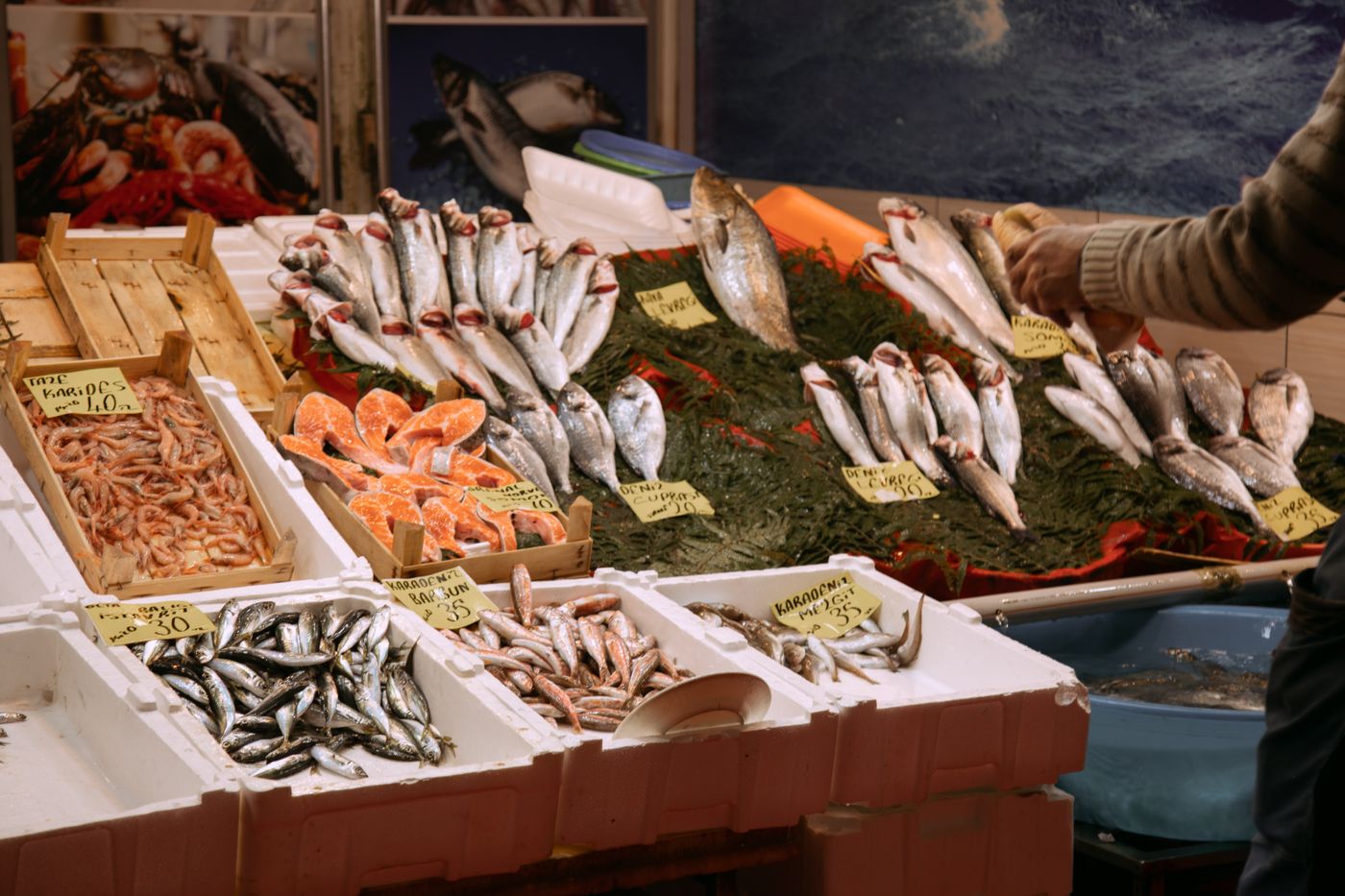
The fishmongers are the theatre of the place. Beds of crushed ice, sea bass and bream laid out in rows, anchovies in season heaped silver and cheap, the odd swordfish steak, mussels, prawns, sometimes a tray of bonito when the autumn run is on. Sellers call out prices, rearrange the display every few minutes, and slap a fish down to show you how stiff and fresh it is.
You don't need to buy a kilo of sea bass to enjoy this; plenty of people just watch. But if you've rented a flat with a kitchen, the fish here is as good as it gets in the city, and whoever is behind the counter will gut and clean whatever you choose without being asked. Prices are by the kilo and chalked on little cards. What they say is roughly what you pay, with mild haggling tolerated rather than expected.
The pickle shops are the real secret
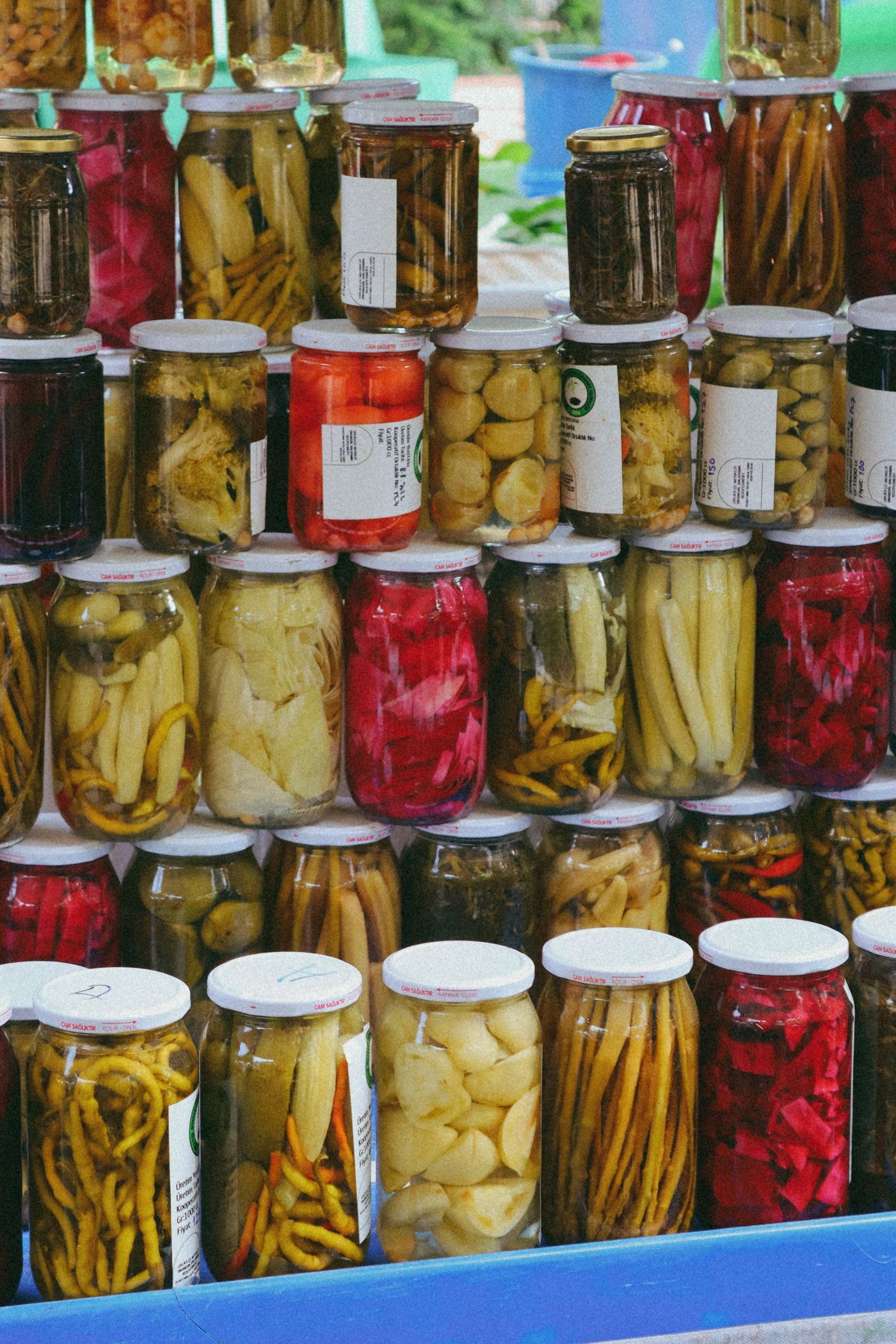
If you do one thing in the market, do this. The turşu shops are floor-to-ceiling glass jars of pickled vegetables: cucumbers and peppers, of course, but also green tomatoes, cabbage, carrots, whole heads of garlic, beetroot that stains everything beside it crimson, and things you won't recognise until you ask. The colours alone are worth the walk.
Here is the part that catches visitors off guard. You can drink the pickle juice. It is called turşu suyu, sold by the cup, often spiced and a little fierce, and locals knock it back like a tonic — salty, sour, and genuinely good on a hot day, or so they swear the morning after a long night. Ask for a small one to start. Hate it, and you are out a few lira. Love it, and you have a new habit.
How to taste your way through. A small jar or a hundred grams of mixed pickles, a wedge of cheese cut to order, a börek eaten standing up, and a coffee to finish. That is a perfect, cheap, hour-long lunch, and you never sat down once.
Cheese, sucuk and the charcuterie counters
The cheese shops here take themselves seriously. Wheels of aged kaşar, slabs of white beyaz peynir in brine, stringy dil peyniri, herb-flecked otlu peynir from the east, and tubs of clotted kaymak if you turn up early enough. A good shop will cut a sliver for you to try without any fuss, and keep going until you find the one you want.
Alongside the cheese sits the cured meat: coils of garlicky sucuk, dense air-dried pastırma crusted in çemen spice paste, salamis hanging in the window. Buy a hundred grams of each, grab bread from a baker two doors down, and you have built a picnic for the price of a coffee back home.
One small warning. Pastırma is strong, in flavour and in aftertaste. A little goes a long way. Worth it.
Spices, dried fruit and nuts
Spice and dry-goods stalls are quieter than the fish but no less rich to look at. Cones of red pepper and sumac, bags of dried figs and apricots, mountains of pistachios, hazelnuts from the Black Sea coast, walnuts, mulberries dried to chewy sweetness, lokum stacked in slabs. This is where you do your edible souvenir shopping, and it travels far better than a fish.
Buy nuts loose, by weight, rather than in the shiny pre-packed boxes; loose ones are fresher and cost less. A scoop of pistachios for the ferry back is one of the small, perfect pleasures of the quarter.
Börek, baklava and the smell of coffee
You are never more than a few steps from something baked. Börek counters sell flaky layered pastry by the slice, filled with cheese or spinach or minced meat, and it is breakfast, snack and emergency lunch all at once. The baklava shops glow with trays of syrup-soaked pistachio and walnut squares, and a single piece with a strong tea is the right amount.
And then there is the coffee. The market has a couple of historic Turkish-coffee houses where beans are roasted and ground on the spot, and the smell rolls down the lane and pulls you in. Fazıl Bey, just off the main drag, is the name people send you to, and it is the proper way to end a loop of the Çarşı: a tiny cup of thick coffee, a glass of water, a square of lokum on the side. Drink it slowly and don't stir the grounds at the bottom.
Çiya, hiding in plain sight
Tucked into these same lanes is one of the most quietly important restaurants in the country. Çiya Sofrası, run by the chef and food researcher Musa Dağdeviren, has spent years rescuing forgotten Anatolian dishes and putting them on a counter where anyone can order them. It is not fancy. You point at what looks good behind the glass, they plate it, you sit at a plain table. The cooking is the opposite of showy and completely worth a meal.
Dağdeviren's work has had a long reach beyond the neighbourhood, which is half the reason food travellers make the pilgrimage to this corner of Kadıköy at all. If you only sit down to eat once during your market wander, sit down here.
When to come, and how to behave
Timing changes everything. On a weekday mid-morning the Çarşı is busy but walkable, displays at their freshest, sellers with time to talk. By Saturday afternoon it is shoulder to shoulder, and on a sunny weekend the main lanes slow to a shuffle. For photographs or a real conversation with a fishmonger, come early in the week.
A few small courtesies go a long way:
- Ask before you photograph a stallholder or their stall. A nod and a smile is usually all it takes, and most will happily oblige.
- Bring cash in small notes. Some shops take cards now, but the market runs on coins and small bills, and exact-ish change keeps things moving.
- Don't block a narrow lane for a photo while people are trying to shop for dinner. Step to the side.
- Try things. Stalls offer tastes of cheese, pickles, lokum and nuts as a matter of course. Accepting is normal; it is not a hard sell.
This is the part of the quarter I would protect from any "must-see" list, because the moment it becomes a checkbox it loses what makes it good. It is not a monument. It is a market where people buy fish for tonight, and you happen to be allowed to walk through it. Go slowly, taste widely, let the coffee at the end be the only thing you planned.
For a wider sense of the district, the neighbourhood's history is worth a glance, and the city's own official pages keep useful practical notes if you like to read up first. But the best preparation is an empty stomach and an afternoon you don't mind losing.