The table
A proper Turkish breakfast
On a free weekend morning, Kadıköy and Moda do the one thing Istanbul does better than almost anywhere: they sit you down at a table that does not end, pour the first glass of tea, and refuse to be rushed.
The Turkish word is kahvaltı, and on a weekday it can mean a glass of tea and a sesame ring eaten standing up. That is not what this is about. I mean the weekend version, the one that swallows a whole morning, and on the Asian side of Istanbul the people who do it best are in Kadıköy and the leafy streets of Moda just beyond it.
Understand one thing before you go. It is not a meal the way a lunch is a meal. It is closer to a slow, edible conversation: you sit, plates arrive, more plates arrive, and an hour later the morning is simply gone and nobody minds.
The serpme, or why your table disappears under plates
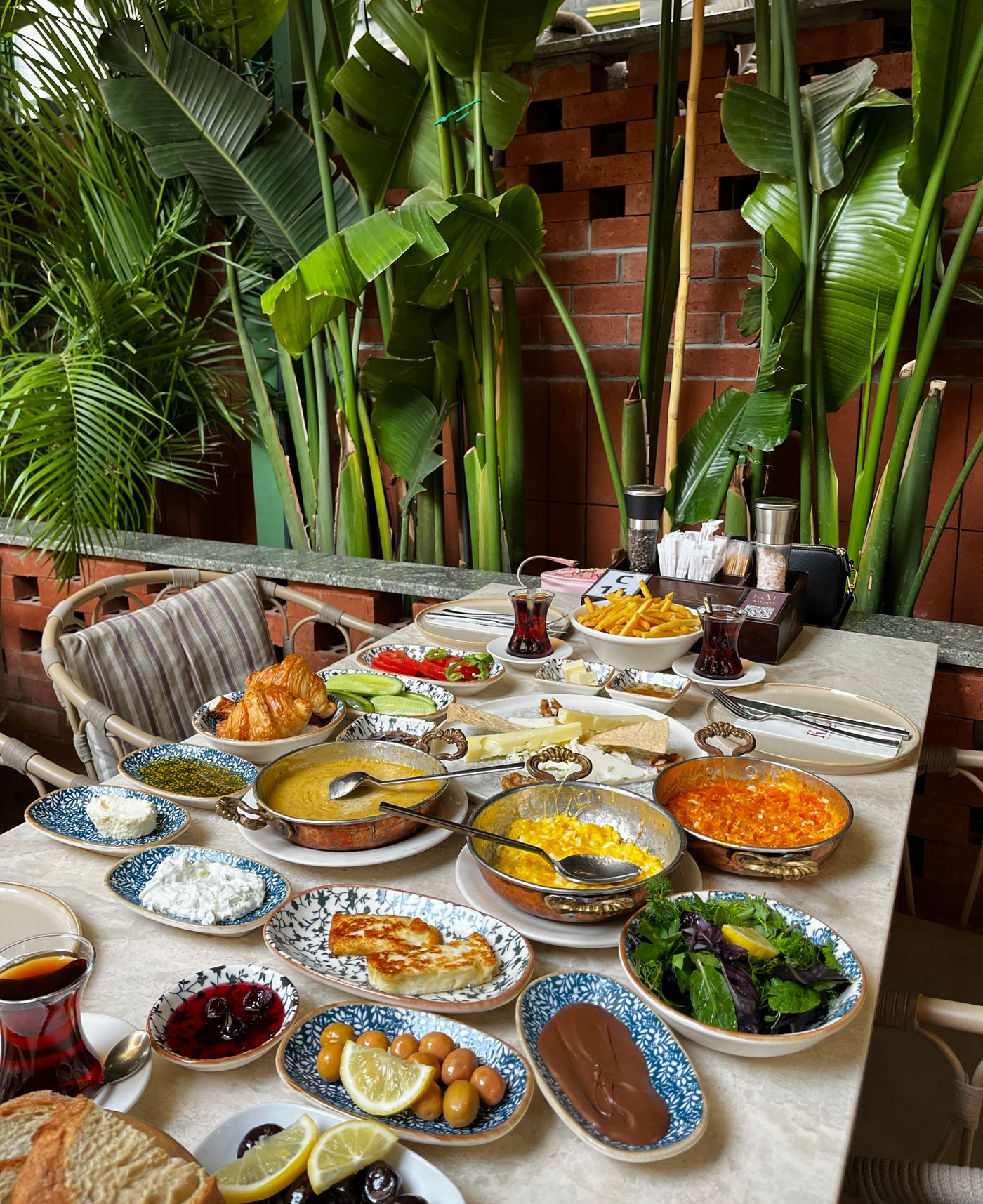
Order a serpme kahvaltı and the word does the explaining. Serpme means scattered, and that is exactly what happens: the food is scattered across the table in a dozen, sometimes two dozen small dishes until you can no longer see the cloth underneath. No single plate of food. Just the whole table.
What lands depends on the place, but the spine of it rarely changes. Three or four cheeses to start: beyaz peynir, the soft white brined cheese that anchors everything; a wedge of aged kaşar, firmer and yellow; and if you are lucky, otlu peynir from the east, shot through with wild herbs so it tastes faintly of a hillside. Then olives, a bowl of black and a bowl of green, usually still glistening with oil.
Around them come the vegetables that make this feel like summer even in February. Tomatoes sliced thin, cucumber cut into batons, sometimes fresh herbs and a few green chillies for the brave. Butter in its own little dish. And then the sweet corner, which I would defend with my life.
The bal-kaymak is the quiet star of every Turkish breakfast. Clotted cream under a pour of honey, scooped onto warm bread. The first bite is the reason people book the table.
It is a generous corner. Honey served with kaymak, the thick clotted cream, so you can fold the two together. Several jams, usually sour cherry, fig and rose, in tiny glass bowls. And tahin-pekmez, sesame paste swirled with grape molasses, which sounds odd and tastes like the best idea anyone ever had at breakfast. Spread it on bread. Thank me later.
The eggs, ordered hot and to the table
That cold spread comes more or less automatically. Eggs you order, and this is where the table earns its name. Two choices matter.
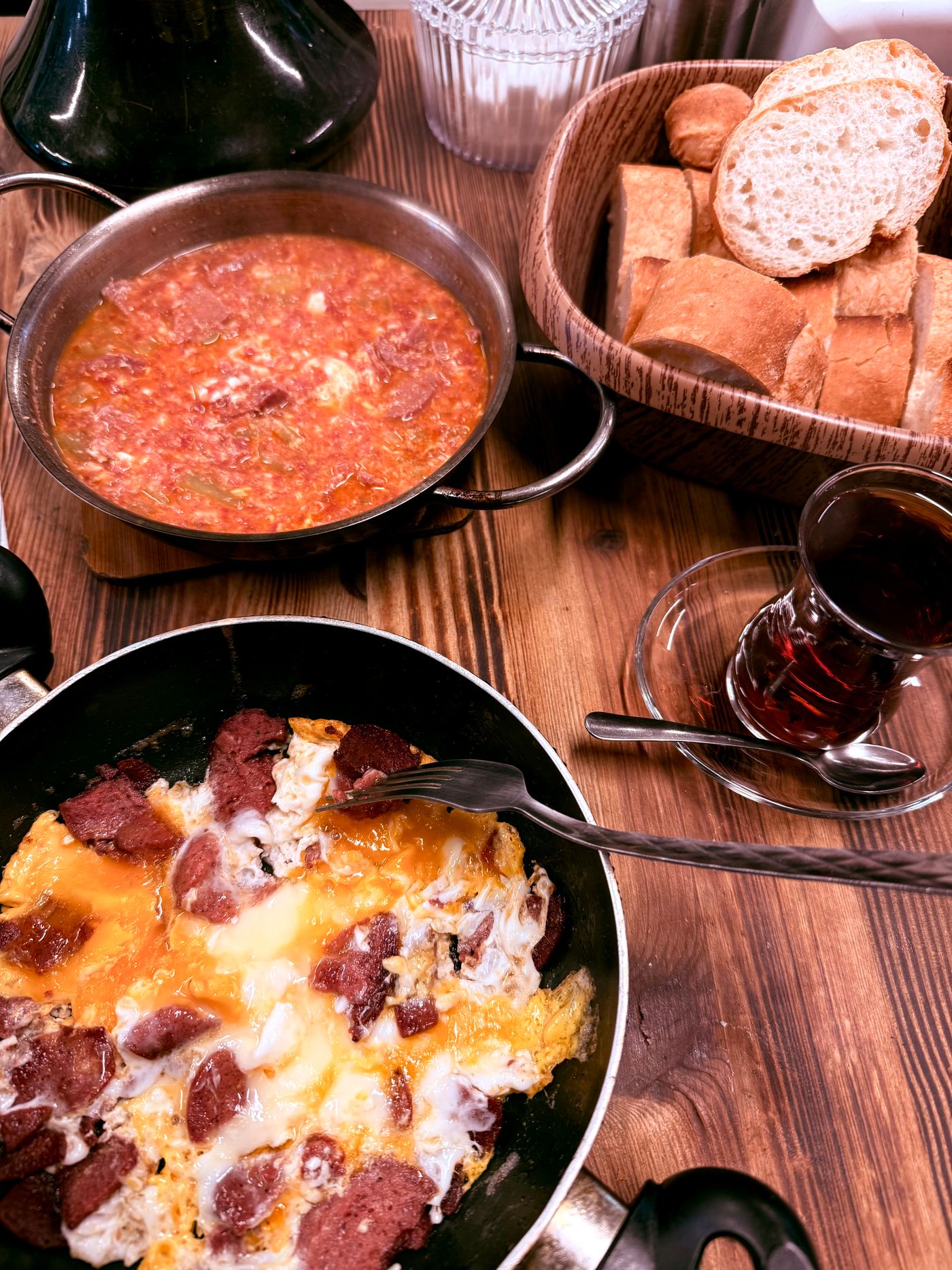
First, menemen: a soft scramble cooked down with tomato and green pepper, sometimes a little onion, ideally still loose and a touch wet rather than dried out. It arrives in a small copper sahan, the two-handled pan, and you eat it straight from there with bread. Done well, one of the great cheap pleasures of the city. Done badly, sad and rubbery, so a place that gets its menemen right tells you a lot about the kitchen.
Then sucuklu yumurta, eggs fried with coins of sucuk, the garlicky cured sausage, until the fat runs and the edges crisp. Rich, not subtle, and on a cold morning exactly right. My honest advice for a table of three or four: get one of each and share. Nobody has ever regretted that order.
The bread, the simit, the fried things
No serpme is complete without the carbohydrate brigade, and they are not an afterthought. Warm white bread keeps coming, replaced before you ask. Alongside it, depending on the place, some run of the morning pastries:
- Simit — the chewy, faintly nutty sesame-crusted ring. Tear it, dip it in the tahin-pekmez.
- Açma — softer and richer, like a savoury brioche, pulls apart in strands.
- Poğaça — small soft rolls, often filled with cheese or potato.
- Sigara böreği — thin pastry rolled around white cheese and fried into a crisp cigar. These vanish first. Always.
You do not order any of this separately at a full serpme spot. It turns up. The trick is pacing yourself so you have not filled up on fried pastry before the menemen even arrives, which, for the record, I have failed to do many times.
And the tea, which never, ever stops
Çay is the engine of the whole thing. Brewed in the double pot, the çaydanlık, with strong liquor on top and hot water below, then poured to your taste into small tulip-shaped glasses, dark in the middle, lighter at the rim. Drink it black, with as much sugar as your conscience allows.
And it is bottomless. A good place keeps the glasses filled for as long as you sit there, which is the entire point. Turn your glass over, or rest the spoon across the top, when you have truly had enough. Otherwise it keeps coming, which is no bad fate.
From the east: if you see a place advertising a Van kahvaltısı, a Van-style breakfast, go in. The eastern city of Van turned breakfast into theatre, and its breakfast halls are famous across the country for the sheer number of plates and for that herbed otlu peynir. Several spots in and around Kadıköy do the Van style, and it is the most committed version of the ritual you will find.
Where to sit, and what it costs
Two areas worth knowing. Moda, the residential quarter south of the centre, all plane trees and cats and people who clearly live there, where you can find places with a garden or a few tables on the pavement. And the lanes around the Kadıköy market, denser and busier, where breakfast shares the air with fish stalls and coffee roasters.
On a sunny morning I lean towards Moda, purely for the chance of an outdoor table under the trees. The market side wins when it is cold or raining and you want to be tucked inside somewhere warm with the windows steamed up.
A full serpme for one is not the cheap end of eating in Istanbul, but it is genuinely good value, because what arrives is essentially a small banquet. Rough per-head figures below, which move with the lira, so treat them as a guide and not gospel:
| What you order | Roughly per person | Notes |
|---|---|---|
| Serpme kahvaltı (the full spread) | mid-range sit-down | Cheeses, spreads, eggs, bread and tea, the lot |
| Menemen on its own | budget plate | With bread and tea, a fine lighter morning |
| Simit and a glass of çay | pocket change | The weekday standing-up version |
| A spot doing the Van style | a notch above | More plates, more specialities, worth it once |
Actual numbers are left off on purpose. The lira moves too fast for a printed figure to stay honest, and the gap between a market café and a polished Moda garden is real. If the place looks fancy, ask the price of the serpme before you sit. Nobody minds the question.
How to do it like you mean it
Timing first, because it matters. This is a late-morning affair: arrive somewhere between ten and one, when the city is properly in it and the kitchens are at their best. Earlier and you are eating a normal breakfast. Later and you are circling lunch.
Weekends fill up. A table of four or more on a Saturday in Moda either goes early or waits with the rest of the neighbourhood, which is itself part of the morning. Smaller groups slot in more easily.
Come on foot. The whole quarter is walkable from the ferry pier, and rolling off a boat from the European side straight into breakfast is, frankly, the correct way to begin a day on the Asian shore.
One last word, less a tip than a request. Do not treat this as a box to tick before the real sightseeing starts. The breakfast is the sightseeing. Order the serpme, get a menemen and a sucuklu yumurta for the table, keep the tea coming, and let it take as long as it takes.