The table
Coffee, the third-wave way
Kadıköy roasts its own beans and takes the cup seriously in two directions at once: the back-lane espresso bars pulling single-origin shots, and the slow, foamy Turkish coffee that has been made here for a very long time.
Walk up from the ferry on the right afternoon and you smell the coffee before you see any of it. Somewhere off the market a roaster is running, and that smell of beans going dark drifts down the lanes and mixes with the fish stalls and the simit carts. Kadıköy drinks a lot of coffee. What surprised me, the first time I spent a week here, is that it drinks it two completely different ways and treats both of them as the real thing.
One is new. The other is older than almost anything else you'll order in this neighbourhood.
The back-lane roasters
Kadıköy's speciality scene grew up quietly, in the narrow streets behind the market rather than on the main shopping drag. You find the espresso bars by accident: a glass front, a heavy chrome machine, a shelf of paper bags with roast dates written on the side, a couple of stools and not much else. The crowd skews young. Students from the nearby universities, designers and freelancers with laptops, people who clearly come every day and have a usual.
This is third-wave coffee in the proper sense, a movement that treats the bean like wine and fusses over the farm, the variety and the roast. If you've seen it in Melbourne or Berlin or Brooklyn you'll recognise it instantly. What's different in Kadıköy is that a lot of these places roast their own, often in the back of the same room, so the beans you buy were dark this week, not last month. (For the longer story of how this style spread, the third-wave coffee movement has a tidy history.)
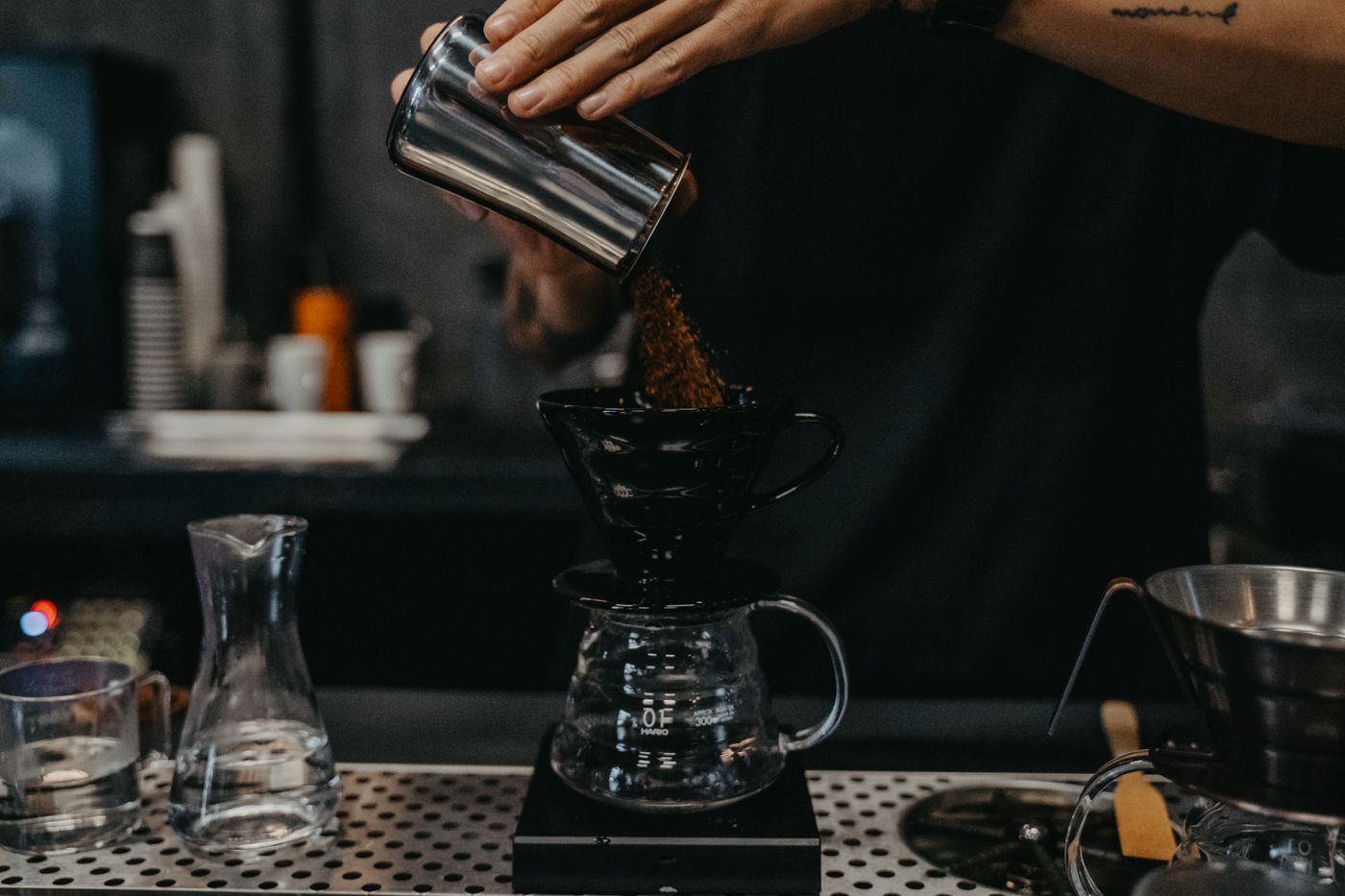
Order an espresso, a flat white or a filter and you'll get the whole ritual: beans weighed to the gram, a V60 or a Chemex over a glass server, water poured in slow circles from a gooseneck kettle. They'll tell you the origin and the tasting notes if you let them, and a few will be a little earnest about it. I find that endearing rather than annoying, but your patience may vary.
The honest tell of a good one: ask what's on filter today and the answer is a country and a farm, not "the house blend." That, and the beans on the shelf have a roast date you can read.
These cafés are easy to sit in for an hour. Most have wifi, plug sockets and at least a couple of tables that nobody minds you holding for the length of a single cup. That's partly why the area filled up with them. Kadıköy has a big creative population that needs somewhere to work that isn't home, and a small espresso bar with good light does the job.
My honest tip: skip the to-go cup. The lanes are pleasant to walk but the whole point of these rooms is to sit in them. Take the corner stool, watch the bar work, and let the second wave of customers come and go around you.
The old way, and why it's slower on purpose
Then there's the coffee that was here long before any of this. Türk kahvesi, Turkish coffee, made the way it has been made for centuries. The beans are ground to a powder, finer than anything an espresso grinder produces, almost like flour. That fine grind is the whole trick, and it's why you can't make a real one in a regular machine.
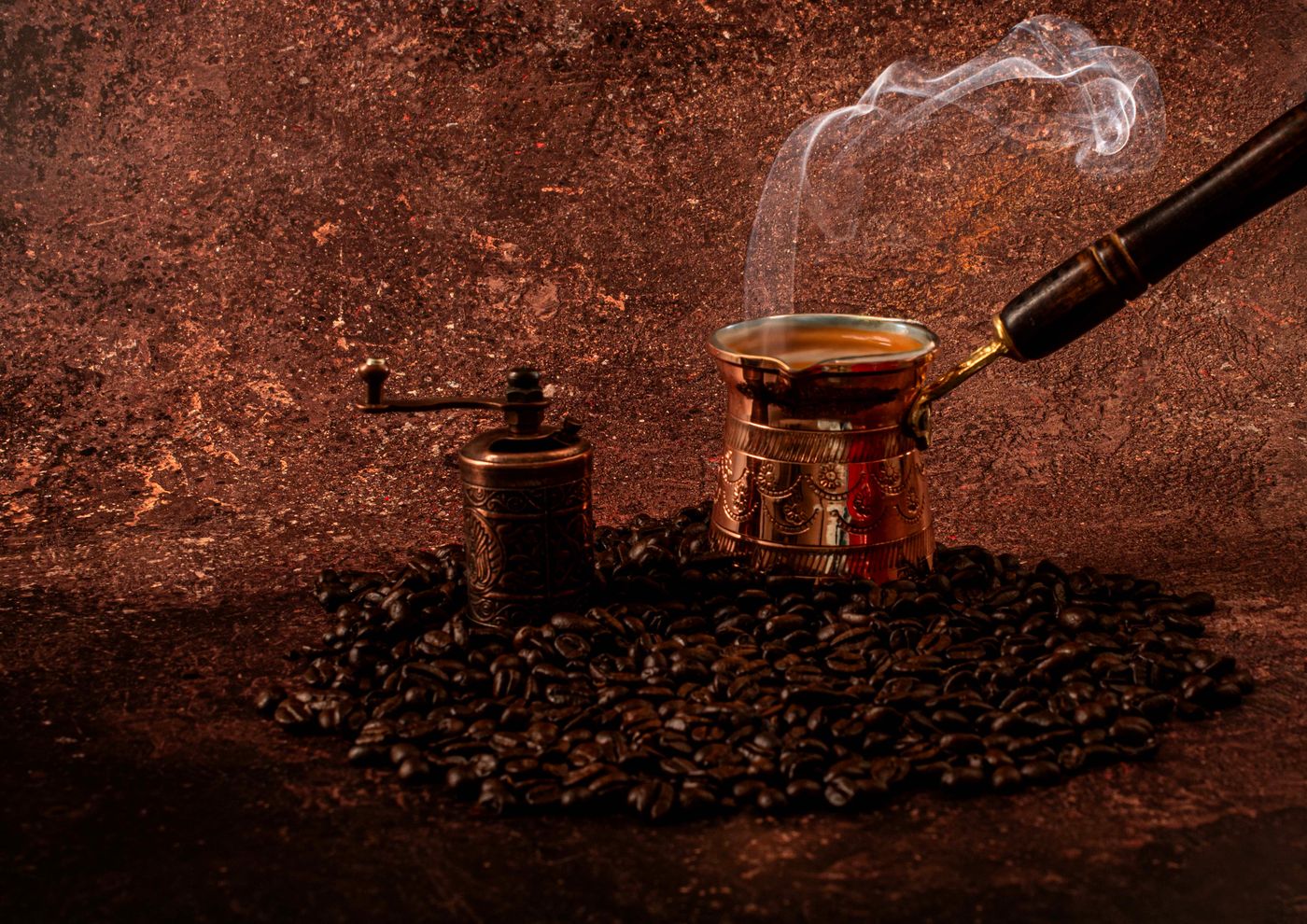
It's brewed in a cezve, the little long-handled copper pot. Coffee, water and however much sugar you want go in cold, and the pot is brought up slowly over a low flame, or in the best places over a bed of hot sand, which heats it evenly and lets the maker control the foam. You don't let it boil hard. You bring it to the edge, watch the foam rise, and pull it off. Grounds are never filtered out; they go into the cup with everything else and settle at the bottom while you drink.
That foam on top, the köpük, is the mark of a cup made properly. A Turkish coffee served flat, with no crema-like layer of foam, has been rushed. This traditional method is unforgiving that way; you can taste a careless one.
Sugar is decided before it's made
One thing that catches visitors out: you choose the sweetness when you order, not after, because the sugar goes in during the brew. The words are worth knowing.
| You ask for | What you get |
|---|---|
| Sade | No sugar at all. The purist's order. |
| Az şekerli | A little sugar. |
| Orta | Medium, the most common choice. |
| Şekerli / çok şekerli | Sweet, and then very sweet. |
Get it wrong and there's no fixing it at the table, so if you're unsure, orta is the safe middle. There's an old line passed around about how the perfect cup should be "black as hell, strong as death, and sweet as love," which tells you exactly how seriously people take the balance of it.
It always comes with a glass of water and usually a small piece of lokum, Turkish delight, on the saucer. Drink the water first to clear your palate. Eat the sweet whenever you like. And don't drain the cup to the bottom, because the last centimetre is grounds, not coffee.
Reading the cup
When you've finished, there's a small piece of theatre that goes with it. You turn the cup upside down onto the saucer, let it cool, and someone reads the patterns the grounds have left on the inside. This is fal, coffee-grounds fortune-telling, and it's done half for fun and half seriously, usually by whoever at the table claims to be good at it. A swirl is a journey. A dark clump is a worry. None of it means anything and all of it is a nice way to make a cup of coffee last another twenty minutes, which is rather the point.
Turkish coffee culture is enough of a fixed part of life here that UNESCO put it on its list of intangible cultural heritage back in 2013. The phrase they used was about it being a setting for conversation, which is exactly right. Nobody orders one to wake up. You order one to sit down.
The historic roasters in the market
For the old-style coffee, the place to buy it ground is the market itself. Among the cheese sellers and the spice stalls are roasters that have been turning out fine-ground Turkish coffee for generations, some well over a hundred years old. You'll know them by the queue and the smell: a copper-coloured machine working in the window, a brass grinder, and coffee handed over warm in a paper twist, ground to powder while you wait.
Buy a small bag even if you don't own a cezve. It keeps, it's cheap, and it smells of the whole neighbourhood. Tell them it's for Turkish coffee rather than a machine and they'll grind it to the right fineness. Watch one of them work the scoop and you understand quickly that this is a craft, not a photo op.
Where I send people: the new way for the morning and the laptop hour, the old way for the afternoon when you've nothing to do but sit. Try to do both in a day. They're not in competition, whatever the purists on either side might tell you.
The etiquette of sitting long
Both kinds of coffee here share one rule, and it's the most important thing to understand about the whole quarter: the cup is permission to stay. Nobody is going to hurry you. There's no second glance for nursing one coffee across an hour with a book, and the staff won't drop the bill until you ask. Turning the table fast is not the business model. Coming back tomorrow is.
So order the flat white and watch the lane. Or order the foamy one, choose your sugar, and turn the cup over at the end to see what the grounds say. Either way you've done it properly, which in Kadıköy mostly means you didn't rush.
For more on what to eat while you're parked at one of these tables, the long Turkish breakfast is the natural companion to a slow morning, and Moda's cafés and ice cream pick up where the coffee leaves off in the afternoon.