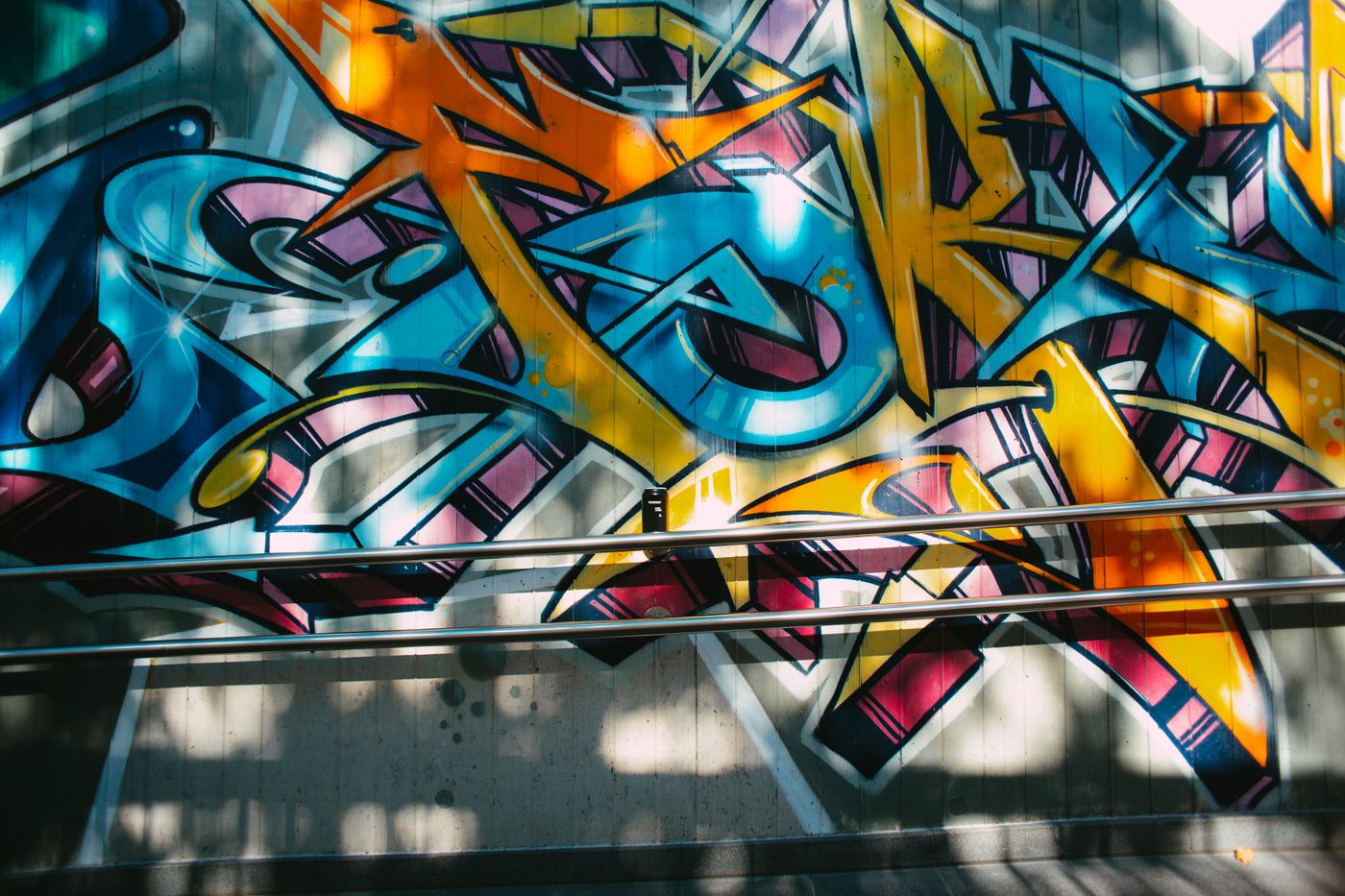
The streets
Yeldeğirmeni and the murals
Ten minutes uphill from the ferry, an old neighbourhood of railway workers and apartment houses has handed its blank end-walls to painters. You walk it for nothing, looking up.
Most people coming off the boat turn into the market and never climb the hill behind the station. That hill is Yeldeğirmeni, and it is the part of Kadıköy I send friends to once they have done the obvious stuff and want to see how the neighbourhood actually grew up.
The name means "the windmills." There were windmills here once, on the high ground catching the wind off the Marmara. The mills are long gone. What stayed is the shape of the place: narrow streets running uphill in a tight grid, tall stone apartment houses pressed shoulder to shoulder, and the steady noise of the railway that built it.
The railway made this neighbourhood
Yeldeğirmeni grew because of trains. When the Anatolian railway pushed east in the late 1800s, its great terminus went up right here on the shore, and the people who ran it needed somewhere to live. Engineers, clerks and station staff filled the slope above the line. It became one of the city's earliest mixed quarters, with Jewish, Greek, Armenian and German households living a few doors apart.
This is also where Istanbul learned to live in apartments. Before Yeldeğirmeni, the city built wooden houses for single families. Here, around the turn of the century, you get some of the first proper apartman blocks in the city: multi-storey stone buildings with several flats stacked up and a shared front door. Look for the dates and names carved over the entrances. Some are German, a small clue to who put the money up.
The most famous is the Valpreda building, a striped, slightly theatrical apartment house that everyone here can point you to. It is not a museum. People live in it. That is Yeldeğirmeni in general: the history is all still in use.
I once spent a whole afternoon here just reading doorways. Carved dates, faded shop names, a Star of David above one lintel, a worn Greek inscription on another. It is a neighbourhood that wears its layers openly.
How the walls got painted
By the 2000s a lot of this was tired. Beautiful, but tired, the way old neighbourhoods get when the original communities thin out and nothing replaces them. The turn came in 2012, with a street-art festival called Mural Istanbul. The idea was simple: invite painters, Turkish and international, and give them the big blank gable ends of the apartment blocks to work on.
Those side walls are perfect for it. When an old apartman stands a little proud of its neighbour, the end wall is a flat slab three or four storeys tall with no windows. For decades they were just grey. The festival turned them into a rolling open gallery and kept going year after year, so the collection grew. Some murals are enormous, swallowing an entire flank of a building. Others are tucked down a side street and easy to miss.
What I like is that the work is genuinely mixed. Giant photo-real portraits, abstract colour fields, a few political pieces, some that are frankly a bit naff, and a couple that stop you dead. You do not need a map. The pleasure is in wandering, turning a corner, and finding the next one looming over a parked car and a row of bins.
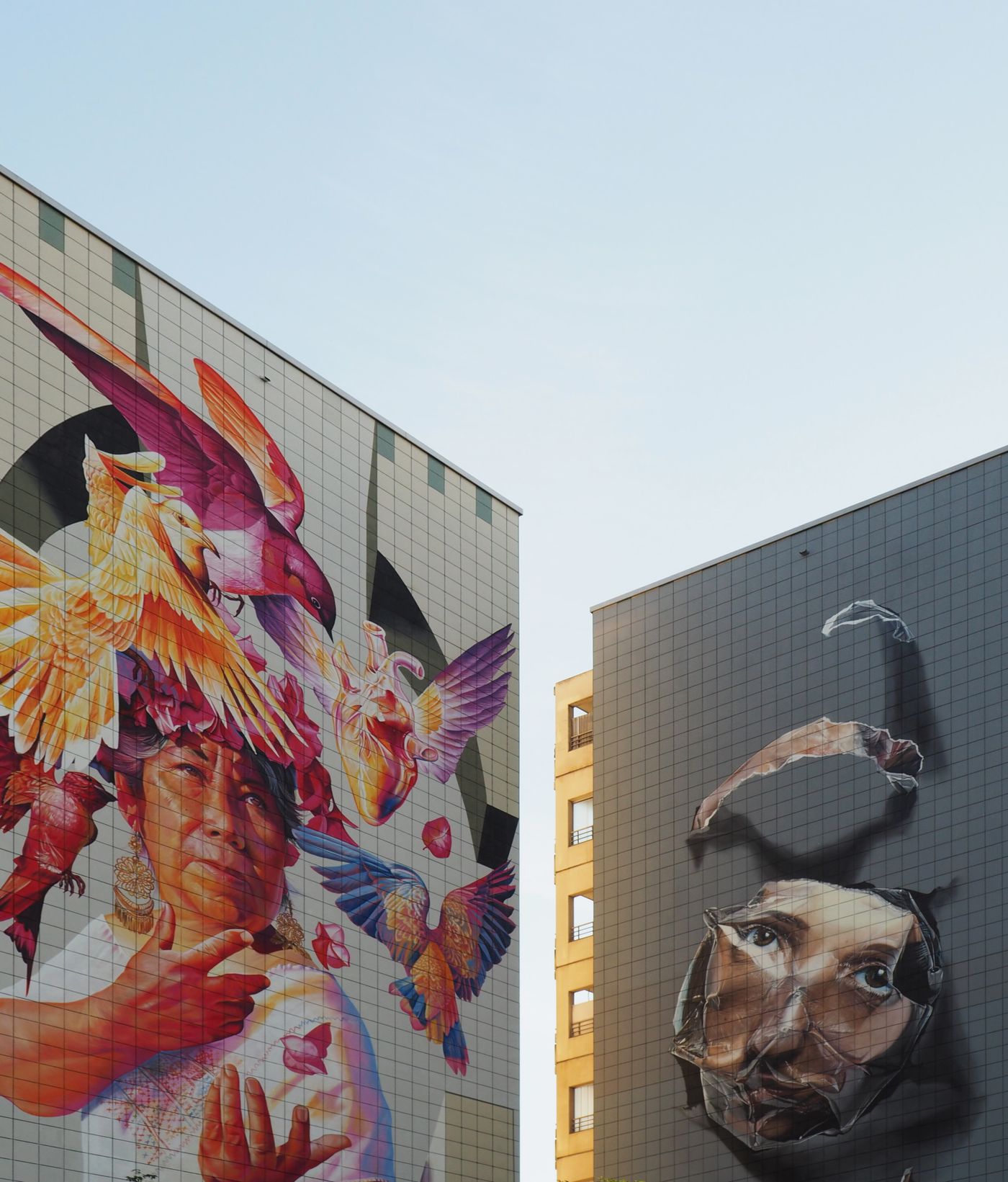
Walking it as a self-guided tour
Treat it as a loop rather than a list. Come up from the station end, work your way through the grid, and let the slope decide your turns. An hour is plenty for a first pass; two if you keep stopping for coffee, which you will.
A rough order that works:
- Start low, near the station. The streets closest to the railway have some of the oldest buildings and a few of the bigger murals on their end walls.
- Climb the grid. Karakolhane Caddesi and the lanes off it are the spine. Wander sideways whenever a wall catches your eye.
- Watch the gaps between buildings. Many of the best murals sit on a side wall that only reveals itself once you are level with it. Look back over your shoulder now and then.
- Finish high, then drop into a café. The top of the neighbourhood thins out; that is your cue to turn around and reward yourself.
A practical note on the murals. They change. Walls get repainted, buildings get renovated, a piece you loved last year may be gone. That is the nature of street art and part of the point. Do not arrive expecting a fixed set of "must-see" works. Arrive expecting to be surprised.
What else is up there
Yeldeğirmeni is not only walls. The revival pulled in a quiet crowd of cafés, small studios, secondhand bookshops and a couple of good record stores. It has not gone fully polished the way some Istanbul neighbourhoods have. You still get the hardware shop and the corner grocer next to the third-wave coffee place, which is the balance that keeps it pleasant rather than a film set.
A few fixed points worth knowing:
Yeldeğirmeni Sanat. A municipal arts centre in a restored building, run as a cultural space with exhibitions, workshops and a café. A sensible place to start or end, partly because it tells you something about the renovation effort that saved these buildings, and partly because the courtyard is a nice place to sit.
The Hemdat Israel Synagogue. A reminder of the Jewish community that was a real presence here. Restored and still in use. You generally need to arrange a visit in advance for security reasons, so treat it as something to admire from the street unless you have planned ahead.
The old churches and the doorways. Greek and Armenian congregations left their mark too. You pass several quiet places of worship, most low-key and easy to walk past. Slow down.
If you only have time for one detour off the murals, make it a coffee stop. Half the appeal of Yeldeğirmeni is sitting on a sloping street with a flat white, watching cats own the place, and looking up at a four-storey painting of someone's face.
Haydarpaşa, the giant at the bottom
You cannot really write about this corner of Kadıköy without Haydarpaşa station. It sits right below Yeldeğirmeni, on the water, and it is one of the most dramatic buildings on the whole Asian shore. The German-built terminus opened in 1908, a vast stone palace of a railway station with twin towers, planted on a man-made platform jutting into the sea. For generations it was where the line to Anatolia began. If you took a train east from Istanbul, you started here.
It has been closed for years, tangled up in fire damage, restoration plans and arguments about its future. You usually cannot go inside. But you can walk down to it, stand on the quay, and take in the sheer scale of it from outside, with the ferries crossing behind you and the gulls making their racket. For me it is the proper bookend to a Yeldeğirmeni walk: the building that gave the neighbourhood its reason to exist, sitting empty and magnificent at the foot of the hill.
Doing it right
A few honest pointers, learned the slightly awkward way.
Daytime. Murals need light, and the streets are more fun when the shops are open. There is no night version of this; it is a walk, not a scene.
Shoes. It is a hill, and the pavements are old. Nothing brutal, but flip-flops will betray you on the steeper lanes.
Keep the noise down, and spend locally. This is somebody's home street, not an attraction with a fence around it. People are hanging washing and walking dogs while you photograph their gable wall. Buy your coffee and your secondhand records from the small places too; that is what keeps the lights on and the walls worth painting.
Most visitors to Kadıköy stay down by the ferry and the market and miss this entirely, which is honestly fine by me. You go up for the paintings and end up staying for the doorways, the cats, the coffee and a hundred-year-old railway station that refuses to be small. For a free afternoon, it is hard to beat.